
Domestic Violence Survivorship
“Why Didn't You Leave?” Is the Wrong Question
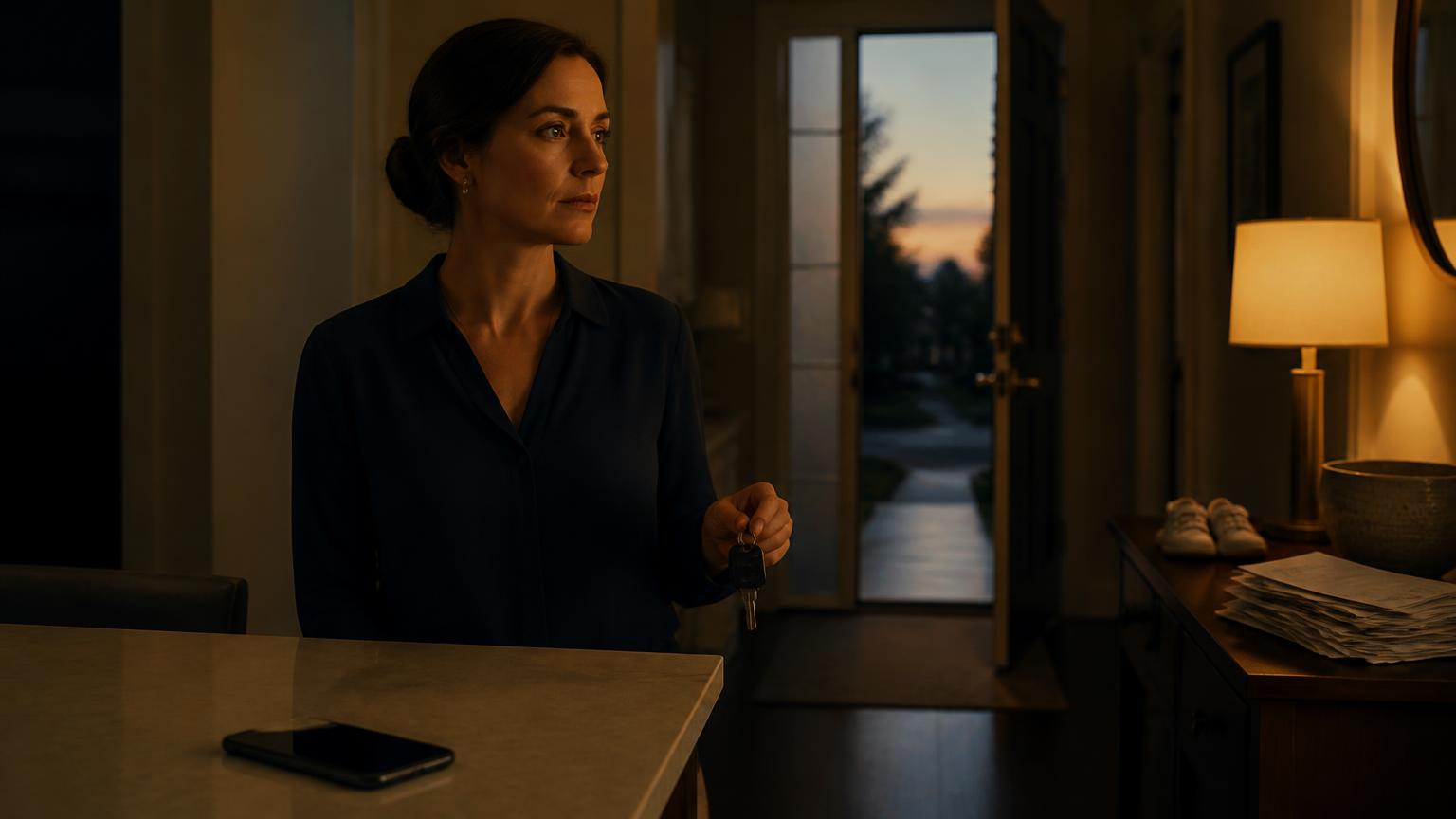
What we miss when we mistake surviving abuse for a simple decision
There is a sentence people say about domestic violence that sounds reasonable until you have lived close enough to abuse to understand what the sentence is asking.
Why didn't you just leave?
Sometimes it comes from genuine confusion. Sometimes it comes from frustration. A parent watches their daughter go back. A friend answers another late-night phone call and cannot understand why this time will be any different. Someone sees the bruises, the messages, the police reports or the tears and thinks the solution is obvious.
Walk out the door.
From the outside, leaving can look like a single decision. From the inside, there may be children sleeping down the hall, a bank account you cannot access, a car you do not own, a pet you cannot take to a shelter, a partner who has threatened to kill you, a family that does not know what has been happening, and a phone that may be tracking where you go.
There may also be love.
That last part makes people uncomfortable.
We want abuse to make love disappear because that would make the story easier to understand. Human attachment does not always cooperate. Someone can know that a relationship is hurting them and still remember who that person was when they first fell in love. They may still want the family they built together. They may believe an apology. They may see genuine tenderness between episodes of cruelty and keep hoping that tenderness is the “real” person.
Wanting the abuse to stop and wanting the relationship to end are not necessarily the same thing.
Fear, shame, intimidation, financial dependence, disability, cultural pressures, children, lack of resources, love and hope that a partner will change can all be part of the reality.
Once you understand that, “Why didn't you leave?” starts to feel like a very small question for a very complicated reality.
Abuse can quietly change the number of choices a person has
People often imagine domestic violence as a collection of violent incidents. Something happens, then it stops. Something happens again.
But many abusive relationships are better understood by looking at what happens between those incidents.
Who controls the money? Who decides where the other person goes? What happens when they disagree? Can one partner work without interference? Can they maintain friendships? Do they have privacy? Are their passwords monitored? Can they make a purchase without explaining it? What happens if they say no?
This is where coercive control matters.
A person does not have to be physically restrained inside a house to have their freedom gradually narrowed.
Maybe the criticism starts small enough to explain away. Then there is jealousy presented as love. The arguments begin whenever they spend time with friends, so eventually seeing friends becomes more trouble than it is worth. A partner starts checking the phone. Money becomes something that must be accounted for. Employment is sabotaged or discouraged. Threats appear. The survivor begins changing their own behavior in anticipation of what will happen if they do not.
By the time an outsider says, Just leave, the survivor may be making that decision from inside a life that has already been deliberately made smaller.
Economic abuse is especially important because money is not merely money when someone is trying to escape. It is transportation, housing, medication, food, childcare, legal help and the ability to survive the first week away.
That changes the question.
Instead of asking why someone hasn't left, perhaps we should be asking:
What has been taken away from them that they would need in order to leave safely?
Leaving can change the danger rather than end it
This may be the most important thing for people outside an abusive relationship to understand.
Leaving is not a magical boundary that an abusive person is required to respect.
Separation can be an especially dangerous period because leaving may threaten the power and control an abusive partner has established. Abuse can continue afterward through stalking, harassment, threats, financial interference, technology, children or other means.
That is why telling someone to “just pack a bag and go” can be dangerously incomplete advice.
A survivor may be calculating risks that nobody else can see.
If I leave while they're at work, what happens when they find me?
If I take the children, what will happen in court?
If I don't take them, are they safe?
Where can I go that they don't know about?
Whose phone can I use?
Will they show up at my job?
Can they see the location of my car?
What happens when the money runs out?
These are not excuses. They are logistics.
And logistics can become matters of safety.
Safety planning may involve identification documents, financial information, medications, legal papers, children's records, transportation, emergency money, keys and access to trusted people or services. Internet use itself may also be monitored.
There is something almost cruel about reducing all of that to a failure of courage.
“I would never let somebody do that to me”
This sentence usually comes from a person imagining themselves at the end of the story while still possessing everything the survivor had at the beginning.
Their confidence.
Their money.
Their support system.
Their sense of what is normal.
Their belief in their own judgment.
Their expectation that the person they love would never deliberately hurt them.
But abusive relationships rarely introduce themselves honestly.
Few people knowingly choose a partner because they expect that person to isolate, frighten, degrade or control them later.
The relationship develops.
So does the abuse.
And human beings make decisions using the information, resources, attachments and fears available to them at the time—not with the clarity available to someone reading the story afterward.
Strength has never been a vaccine against manipulation.
Intelligence doesn't make a person impossible to deceive.
Independence doesn't guarantee that another human being cannot gradually undermine it.
And loving someone does not mean you consented to being harmed by them.
What happens when they go back?
This may be the hardest part for family and friends.
You helped them leave.
You answered the phone.
Maybe you gave them somewhere to stay. You listened to everything that happened. You watched them begin to recognize the abuse for themselves.
Then they went back.
It can make the people who love them angry. Sometimes frightened. Sometimes exhausted.
Those feelings are real.
But shame is rarely an effective exit strategy.
If every return is met with “I told you so,” the survivor learns something dangerous: that admitting what is happening may cost them another relationship.
Isolation is already useful to an abusive person.
We should be careful not to help create more of it.
Supporting someone does not mean pretending their partner's behavior is acceptable. It does not require financing every crisis, placing yourself in danger or abandoning your own boundaries. It can mean remaining a trustworthy point of contact while refusing to participate in the fiction that abuse is normal.
Sometimes the most useful sentence is not, “Why are you doing this again?”
It is, “When you're ready to think through your options, I'll listen.”
Maybe we have been asking the wrong person to explain themselves
There is something else hidden inside Why didn't you leave?
The question places the survivor's behavior at the center of the investigation.
Why did you stay?
Why did you believe them?
Why did you go back?
Why did you have children with them?
Why didn't you call the police?
Why didn't you tell somebody?
Meanwhile, another question receives remarkably little attention:
Why did the person who claimed to love you believe they had the right to control, frighten or hurt you?
Domestic violence is fundamentally connected to power and control. That framing matters because it moves responsibility back toward the behavior that created the danger rather than treating the survivor's response to that danger as the central problem.
Maybe a better conversation begins there.
Not because survivors have no agency. They do, and restoring agency is essential.
But agency is strengthened when people have more safe choices, not when they are shamed for failing to choose an option that may not yet be realistically available.
So when somebody you care about is living through abuse, resist the temptation to prove that you can see the situation more clearly than they can.
Help make their world bigger.
Listen without humiliating them. Believe what they tell you. Learn about local resources. Ask what would make them safer. Respect that they know details about their situation that you do not. If they are considering leaving, encourage individualized safety planning rather than an impulsive confrontation.
And if you are the person reading this from inside the relationship, you do not have to prove that what happened was “bad enough” before you deserve information and support.
You are allowed to begin with one question:
What would make me safer than I am today?
You don't have to solve the rest of your life before you answer it.
A GraceBridge Reflection
If you've ever judged yourself for staying longer than you thought you would, try looking at that period of your life without the knowledge you have now. What were you afraid would happen? What resources did you have? What resources were missing? What did you still believe or hope would change?
There is a difference between examining our choices so we can grow and putting ourselves on trial for the ways we tried to survive.
Understanding that difference can be part of reclaiming your voice.
Safety resource
For confidential domestic-violence support in the United States, the National Domestic Violence Hotline is available at 800-799-SAFE (7233), by text by sending START to 88788, and through online chat at thehotline.org. If internet activity may be monitored, consider using a safer device when seeking help. In an immediate life-threatening emergency, call 911.
A quiet moment
Reflect on what you just read
Share how you're feeling after reading “Why Didn't You Leave?” Is the Wrong Question, and receive a few gentle journaling prompts drawn from this article. Nothing you write is saved.
AI-generated educational prompts, not counseling. If you are in crisis, call or text 988 (US).
Read next
Domestic Violence Survivorship
Domestic Violence Is More Than Physical Abuse
Abuse is a pattern of power and control, not only a physical act. A clear, compassionate guide to coercive control, emotional harm, financial abuse, digital monitoring, strangulation risk, and where to find confidential help.
Domestic Violence Survivorship
You Left—but the Control Didn’t: Understanding Post-Separation Abuse in the Digital Age
Leaving and being free are not always the same event. An educational look at post-separation abuse through phones, parenting apps, money, and reputation.

Domestic Violence Survivorship
What Happens When Telling the Truth Costs More Than Keeping the Secret?
What happens when survivors of domestic violence disclose abuse and are met with disbelief, and why others' reactions are not the final word on your reality.
Gentle notes for the healing road
One thoughtful letter a week. No noise, no pressure. Unsubscribe anytime.