Domestic Violence Survivorship
You Left—but the Control Didn’t: Understanding Post-Separation Abuse in the Digital Age
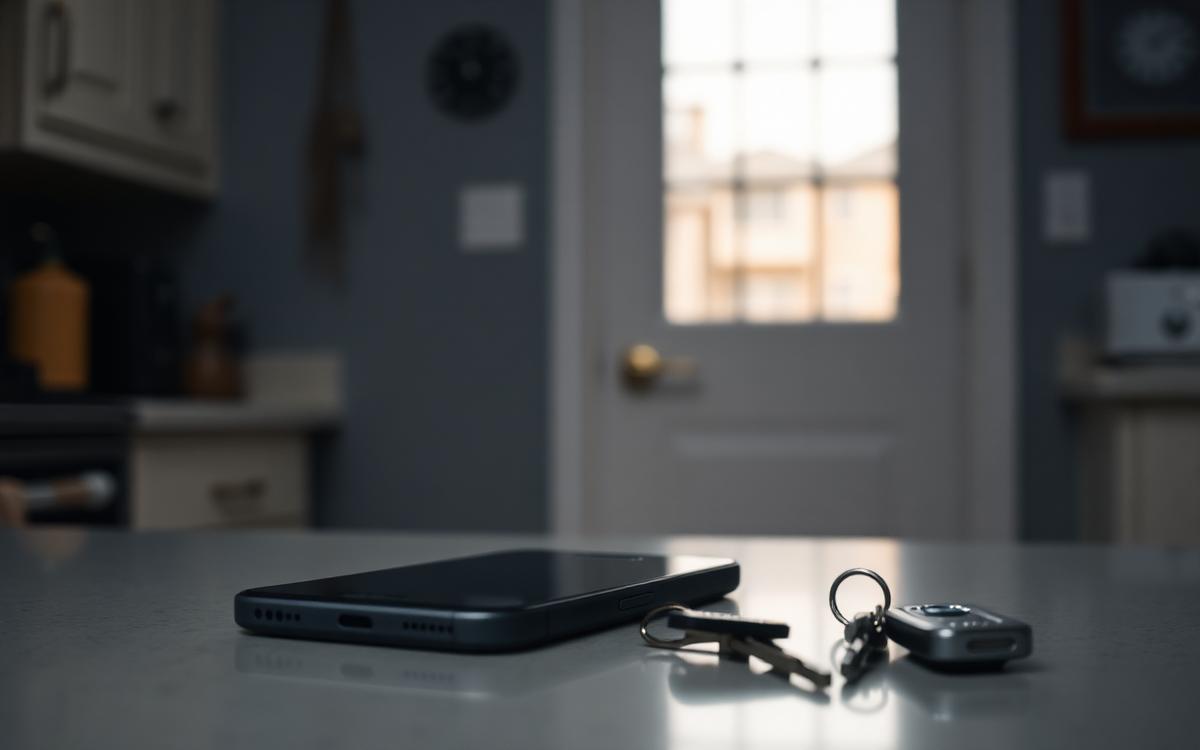
Leaving and being free are not always the same event. An educational look at post-separation abuse through phones, parenting apps, money, and reputation.
There is a version of domestic violence people understand easily.
Someone is being hurt.
They leave.
They are safe.
The relationship is over.
The story ends.
But for many survivors, that is not how it happens.
Sometimes leaving ends the relationship.
It does not immediately end the control.
The calls continue.
The messages continue.
The accusations continue.
Money becomes another weapon.
Children become another point of access.
A parenting app becomes another place where every word feels monitored.
A shared account becomes a reminder that someone still has access.
You finally leave—and discover that freedom is not always delivered at the same moment as separation.
Sometimes leaving ends one form of access.
Sometimes control changes shape.
Leaving and Being Free Are Not Always the Same Event
Leaving can be a process.
You may leave physically before you feel emotionally free.
You may separate legally and still be connected through children.
You may move out and still share property.
There may be court dates, custody exchanges, debts, school decisions, medical decisions, family connections, and other unavoidable contact.
This is one reason:
“Why don’t you just block them?”
can be painfully simplistic.
Coercive Control Is About Access to Your Life
Physical violence matters enormously.
But domestic abuse is not limited to physical assault.
Coercive control can affect freedom, autonomy, resources, privacy, communication, relationships, and decision-making.
After separation the methods may shift.
Children.
Money.
Reputation.
Technology.
Legal systems.
Housing.
Employment.
Social media.
The form may change.
The pattern may not.
Sometimes the Phone Becomes the New Doorway
Modern relationships involve:
shared passwords,
location sharing,
cloud accounts,
phone plans,
smart-home systems,
social media,
shared calendars,
connected vehicles,
banking apps,
parenting apps.
Technology-facilitated abuse research documents how digital systems can be used for harassment, monitoring, threats, surveillance, humiliation, and control.
The issue is not the technology itself.
The issue is how access and information are used.
Parenting Can Become a Bridge the Survivor Cannot Burn
Children can require years of continued communication.
School.
Healthcare.
Holidays.
Transportation.
Custody schedules.
A 2026 study of post-separation parenting apps found the apps could become spaces where coercive control continued, while record-keeping features could also provide mechanisms of resistance or documentation.
Technology cannot turn a coercive relationship into a cooperative one merely because communication moved onto an app.
Documentation Can Be Helpful—and Exhausting
Survivors are often told:
Document everything.
Screenshots.
Dates.
Police reports.
Messages.
Court records.
Bank statements.
Photographs.
Incident logs.
Documentation can be important.
But there can also be a psychological burden in maintaining an archive of the very experiences someone is trying to heal from.
Professionals should understand both sides.
Money Can Continue the Relationship Long After Love Ends
Economic abuse may involve:
account control,
employment interference,
debt,
damaged credit,
withheld resources,
financial dependency,
shared property,
unpaid obligations.
Current research identifies economic abuse as an important part of coercive-control trajectories and suggests it may intensify around separation or perceived loss of control.
Financial independence is not simply a budgeting issue here.
It can be a safety issue.
Abuse Can Continue Through Reputation
The former partner may tell people:
You’re unstable.
You’re lying.
You’re bitter.
You’re keeping the children away.
You’re the abusive one.
You may feel an overwhelming need to prove everything.
But recovery cannot depend on correcting every person who believes someone else’s version.
Legal or custody implications may require professional action.
Emotionally, however, you may eventually have to decide where your energy belongs.
“Just Leave” Ignores What Happens After
Leaving may be necessary.
Leaving can save lives.
But those two words erase hundreds of questions:
Where will you go?
What happens to the children?
Can you afford housing?
What happens to the pets?
Do they have access to your accounts?
Do they know where your family lives?
Have previous attempts to leave increased the danger?
Those are not excuses.
They are realities.
My Own Understanding of Leaving Has Changed
There was a time when I thought freedom would feel obvious.
That once you were away, your body and mind would immediately understand:
It’s over now.
But leaving can happen long before your nervous system believes you are free.
You can be miles away and still jump when the phone rings.
You can know you do not have to answer and still feel panic when a message arrives.
Sometimes the door closes before the fear does.
Healing is not only learning to live without the person.
It can also mean learning to live without organizing your entire life around their possible reaction.
That is a different kind of freedom.
I Do Not Want to Call Hypervigilance Love Anymore
There is a version of love where you are always watching.
Watching their mood.
Watching your words.
Watching the clock.
Watching the phone.
Eventually vigilance can become so normal that you stop recognizing how exhausting it is.
I no longer believe love should require one person to become a full-time weather station for another person’s emotions.
That is not intimacy.
That is survival.
There Is No Perfect Survivor
A survivor may:
answer messages,
argue back,
return,
miss the person,
check their social media,
be angry,
make mistakes.
Human behavior under prolonged stress is messy.
Survivors do not have to perform perfect victimhood before harm becomes real.
A GraceBridge Reflection: What Followed Me After I Left?
What form did control take during the relationship?
What changed after separation?
What did not?
Which forms of contact are truly necessary?
Has money remained a source of leverage?
Has technology remained a source of fear?
Which systems am I navigating?
Where do I need professional guidance?
What evidence tells me my life belongs to me now?
What choice have I made recently because I wanted it?
My Life Cannot Remain Organized Around the Person I Left
There was already enough of my life organized around surviving.
I do not want the rest of it organized around proving what happened.
I do not want survival to become the permanent architecture of my future.
At some point rebuilding must contain something besides protection.
Joy.
Purpose.
Education.
Work.
Friendship.
Faith.
Rest.
Travel.
Laughter.
Love that does not hurt.
Dreams that have nothing to do with the person who tried to control you.
That is what freedom begins to look like to me.
Not simply:
They no longer have me.
But:
I have myself again.
You Do Not Have to Spend the Rest of Your Life Proving You Survived
Your whole life does not have to remain a courtroom.
You are allowed to build something that has nothing to do with proving what happened.
You are allowed to become more than the evidence.
Freedom Can Be Quiet
Sometimes freedom is:
not checking whether someone is angry,
not explaining yourself,
sleeping through the night,
buying something without fear,
putting your phone down,
choosing silence because you want silence.
These moments can look ordinary.
For someone who lived under control, they can be revolutionary.
If You Left and the Control Continued
The fact that abuse changed form after separation does not mean leaving was pointless.
The fact that you still feel afraid does not mean you failed.
Freedom may come in layers.
Safety may have to be built.
Healing may take longer than the paperwork.
But every piece of your life you reclaim matters.
Leaving may not have ended everything.
But it may have started something.
Your return to yourself.
What I Want Survivors to Know
I do not believe your goal has to be becoming the person you were before the relationship.
Some knowledge came at a terrible cost.
I would never romanticize that.
But there can still be something ahead that does not belong to the person who hurt you.
A life where your decisions are your own.
A home that feels peaceful.
Relationships where disagreement does not feel dangerous.
A future you do not have to ask permission to imagine.
Continue the reflection
If leaving is behind you and the question now is who you are becoming, the companion article Who Am I After Survival? Rebuilding Identity, Trust, and a Life of Your Own After Abuse picks up where this one ends.
Research & further reading
This article draws on peer-reviewed research and established public-health guidance, including:
- 2026 research on post-separation parenting apps and coercive control.
- Technology-facilitated intimate-partner abuse literature.
- 2026 research on economic abuse and coercive control.
- Broader peer-reviewed research on post-separation coercive control.
Important note
If you are in immediate danger, call 911. In the United States, the National Domestic Violence Hotline is available at 1-800-799-7233 (or text START to 88788). This article does not provide operational surveillance or counter-surveillance guidance; safety planning is best done with a trained advocate who knows your situation.
This article is educational and reflective. It is not psychotherapy, counseling, legal advice, diagnosis, or individualized treatment.
Stacey D. Stevenson writes here in a personal, educational capacity and not as a licensed mental-health professional.
A quiet moment
Reflect on what you just read
Share how you're feeling after reading You Left—but the Control Didn’t: Understanding Post-Separation Abuse in the Digital Age, and receive a few gentle journaling prompts drawn from this article. Nothing you write is saved.
AI-generated educational prompts, not counseling. If you are in crisis, call or text 988 (US).
Read next

Domestic Violence Survivorship
Who Am I After Survival? Rebuilding Identity, Trust, and a Life of Your Own After Abuse
Survival skills do not switch off the day you are safe. An educational look at rebuilding identity, self-trust, community, and a life that belongs to you.
Domestic Violence Survivorship
“Why Didn't You Leave?” Is the Wrong Question
Leaving abuse is rarely one decision. An educational look at coercive control, economic abuse, post-separation danger, and how to support someone without shaming them.

Domestic Violence Survivorship
What Happens When Telling the Truth Costs More Than Keeping the Secret?
What happens when survivors of domestic violence disclose abuse and are met with disbelief, and why others' reactions are not the final word on your reality.
Gentle notes for the healing road
One thoughtful letter a week. No noise, no pressure. Unsubscribe anytime.