
Grief & Bereavement
When the Person Who Held the Family Together Is Gone, Everybody Changes

Grieving the person, the role they held, and the version of the family that may have existed only while they were alive
Some people occupy more than one chair in a family.
They may technically be the mother, father, grandmother, sibling, spouse, aunt, or friend, but the role they actually play is harder to name. They remember everyone’s birthdays. They know who is speaking to whom. They call the sibling who would otherwise disappear for six months. They make holidays happen. They keep photographs, recipes, phone numbers, stories, traditions, and grudges organized in the same mind. They understand which relative needs a little extra kindness and which conversation should probably not happen at Thanksgiving. They are not simply a member of the family. In ways nobody fully notices while they are alive, they are part of the infrastructure.
Then they die.
At first, everyone grieves the person. Eventually, the family begins discovering the role that disappeared with them.
The phone stops ringing as often. The holiday happens somewhere else or does not happen at all. Two siblings realize the only reason they spoke regularly was because a parent kept both connected. A younger family member quietly becomes the person who organizes everything, although nobody formally asked them to. Another family member refuses that role and is judged for not stepping into it. Long-standing tensions that were buffered by the deceased are suddenly easier to see.
This is one reason grief is not entirely an individual psychological event. A 2026 systematic review examining family dynamics in bereavement synthesized 29 studies and found recurring themes involving communication and cohesion, caregiver influence, roles and reorganization, and cultural or social context. The review also noted limitations in the existing literature, including heavy reliance on self-report, retrospective, and cross-sectional designs. The important contribution is not a formula for how families grieve. It is the recognition that death changes systems.
Families are systems because people occupy roles in relation to one another. One person mediates. Another distances. Someone takes care of practical problems. Someone creates humor. Someone remembers history. Someone carries the emotional weight nobody talks about. When one person disappears, those relationships do not simply continue with an empty space. They adjust around the empty space.
That adjustment can create conflict at exactly the time everyone assumes grief should be bringing people closer.
Different people may grieve the same person differently because they did not lose the same relationship. One sibling lost a confidant. Another lost someone they had unresolved conflict with. A spouse may have lost a daily companion and practical partner. An adult child may have lost the person who still made them feel like somebody’s child. Grandchildren may be grieving both the person and the family rituals that person created.
No one person’s grief necessarily invalidates another’s, but families sometimes behave as though there should be a single correct version.
Then responsibilities begin moving.
Who hosts now?
Who checks on the surviving parent?
Who keeps the family informed?
Who handles belongings?
Who remembers the recipe?
Who calls the relative everyone else avoids?
Who keeps everybody together?
The answer is sometimes no one.
That can be its own grief.
There is a painful moment when someone realizes that the family did not possess a tradition as much as one person possessed the energy required to maintain it.
Without them, the tradition may not survive.
People can interpret that as failure. “We should keep doing what she would have wanted.” “He would hate seeing everyone drift apart.” There can be love inside those statements, but also pressure. The deceased may become an invisible standard against which the reorganized family is judged.
Perhaps part of grief is accepting that the family after the loss cannot be an exact continuation of the family before it.
This does not mean traditions should disappear. Some become more important. A recipe can become a place to remember. A gathering can become a deliberate act of continuity. But other rituals may have depended upon a specific person’s personality, labor, finances, home, health, or willingness. Trying to reproduce them perfectly can turn memory into obligation.
The family has to learn what it actually wants to carry forward.
That process can reveal old dynamics. The person who always fixed things may no longer be present to repair sibling conflict. The person who absorbed everyone’s emotional needs may no longer be there to prevent others from having to tolerate one another directly. Sometimes death exposes how dependent a family was on one individual’s invisible labor.
It can also create new relationships.
Two siblings who rarely spoke may discover they now need one another. A younger person may become the keeper of family stories. A previously peripheral relative may become unexpectedly important. Grief can reorganize closeness as well as distance.
None of this means the death was “for a reason.” Families do not need to find a positive lesson in loss. What it means is simply that living systems continue changing even when they would rather not.
Sometimes when one person dies, an entire version of the family dies with them.
That sentence can sound frightening until we understand what it does and does not mean.
It does not mean love disappeared.
It means the structure that held that love has changed.
The next version of the family may gather differently. Communicate differently. Remember differently. It may be smaller. It may become closer. It may become more distant. Some relationships may not survive the reorganization, and others may develop in ways nobody expected.
Grief asks people to mourn a human being.
Family grief sometimes asks them to mourn an ecosystem.
The goal is not necessarily to restore everything to what it was.
It may be learning which pieces deserve to be carried forward and which pieces belonged uniquely to the person who is gone.
A GraceBridge Reflection
Think beyond the person’s title in the family. What did they actually do that helped the family function? What emotional, practical, or relational role disappeared with them? Then consider whether someone has silently inherited that role. Is it sustainable? Does it need to be shared? Some grief becomes heavier because people are trying to replace a person whose role was never meant to belong to one replacement.
Sources & Further Reading
- Donna Levin, Molly Quartermaine, Andrea Gavshon, Christopher Sealey, and Lauren J. Breen. “Family dynamics and the grieving process: A systematic review and narrative synthesis.” Death Studies. 2026; online ahead of print:1–16. DOI: 10.1080/07481187.2026.2693950. PMID: 42363652.DOIPubMedNote: The evidence in this review relied heavily on self-report, retrospective, and cross-sectional designs. Family reorganization after a death is not universal or deterministic.
A quiet moment
Reflect on what you just read
Share how you're feeling after reading When the Person Who Held the Family Together Is Gone, Everybody Changes, and receive a few gentle journaling prompts drawn from this article. Nothing you write is saved.
AI-generated educational prompts, not counseling. If you are in crisis, call or text 988 (US).
Read next
Grief & Bereavement
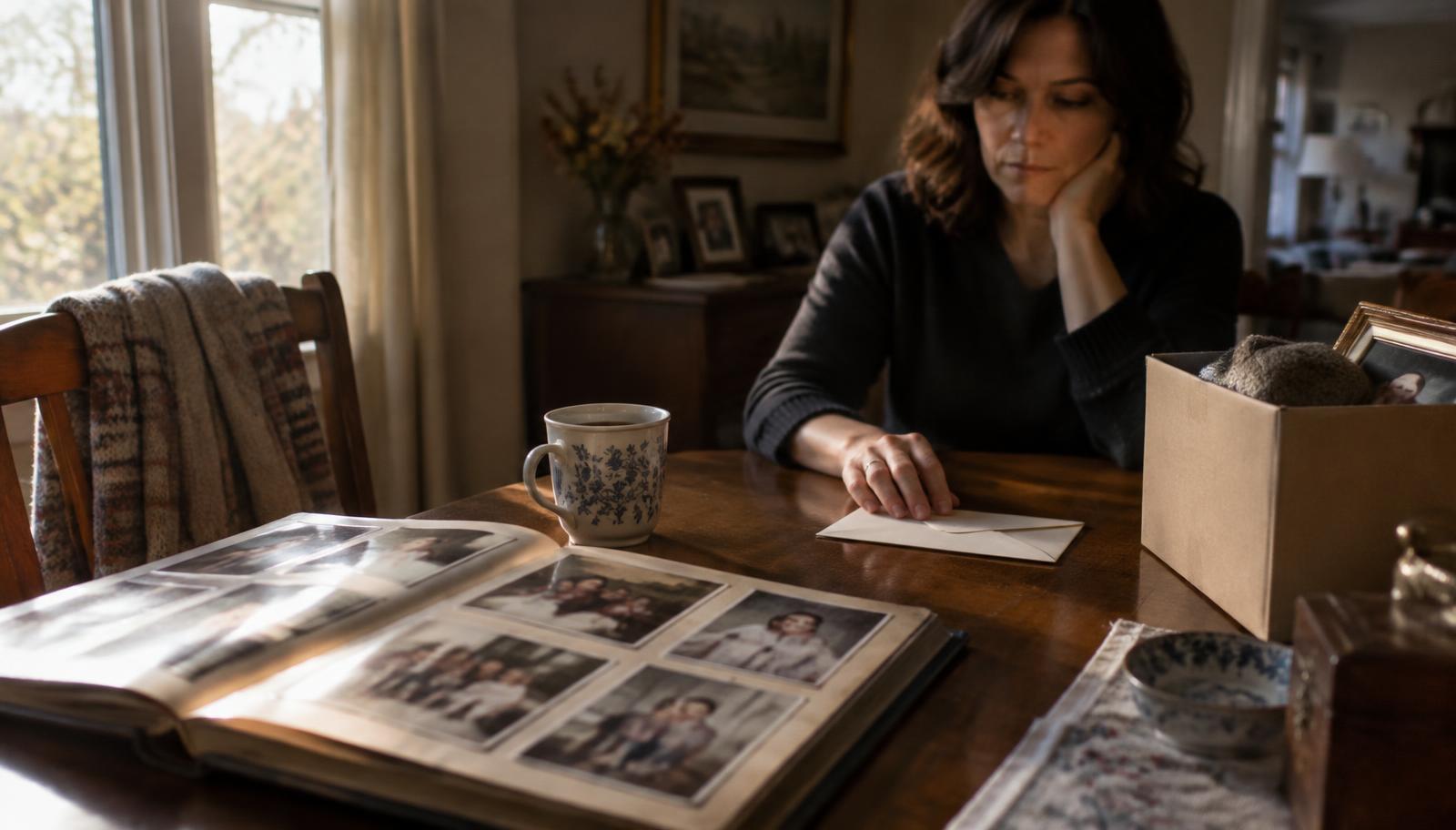
How Do You Grieve Someone Who Also Hurt You?
When death does not turn a complicated relationship into a simple one.

Grief & Bereavement
If I Keep Changing, Will I Eventually Become Someone You Never Knew?
The quiet grief of continuing to change after someone you love can no longer witness who you are becoming.
Grief & Bereavement
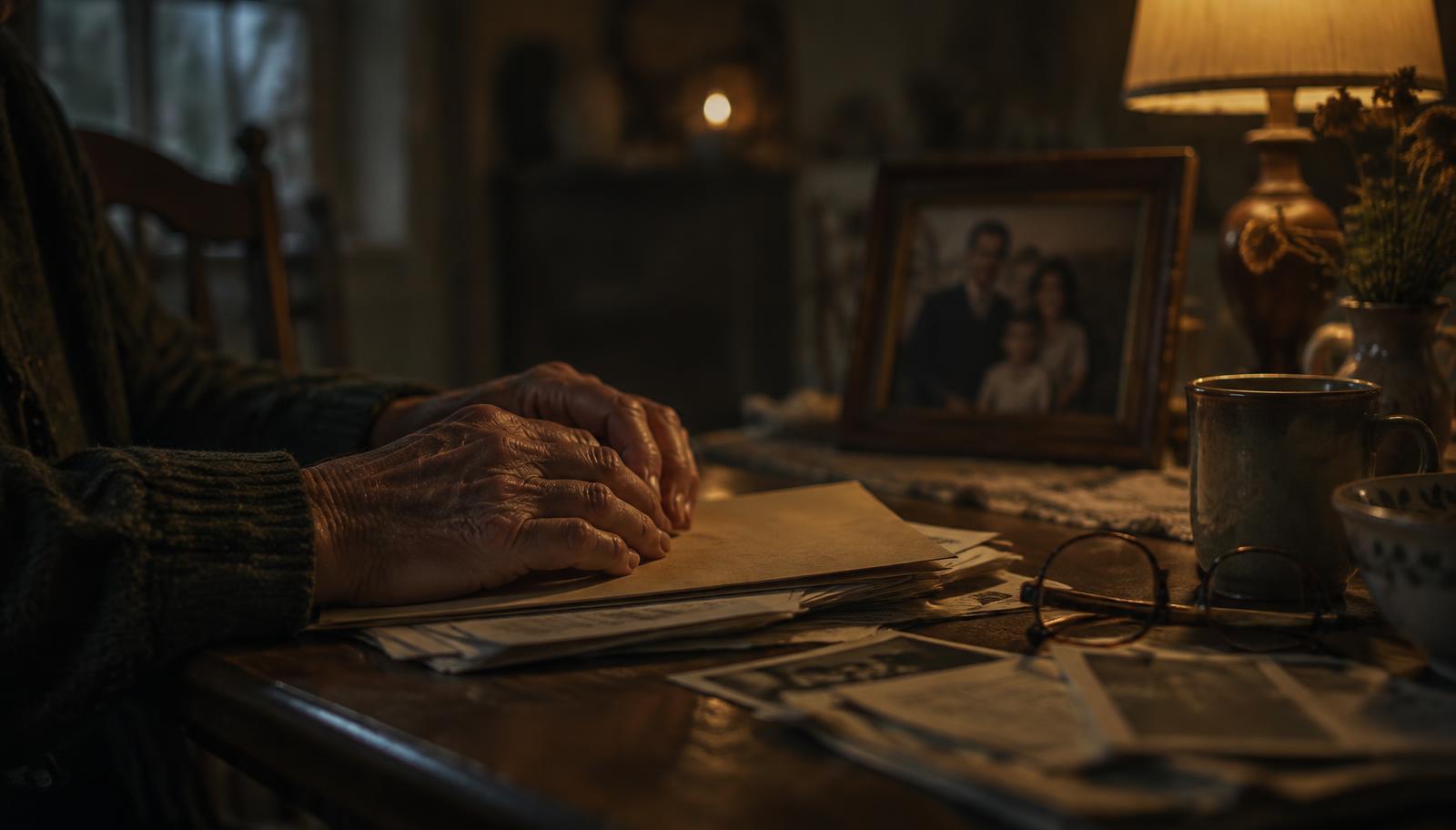
When Grief Comes With Paperwork
After someone dies, grief often arrives with forms, calls, certified copies, deadlines, and decisions. A compassionate guide to carrying the invisible administrative work of loss without judging yourself for finding it hard.
Gentle notes for the healing road
One thoughtful letter a week. No noise, no pressure. Unsubscribe anytime.