Addiction Recovery
What Are You Supposed to Do With the Pain When You Stop Numbing It?

The part of recovery we don't talk about enough
There is a version of addiction recovery that looks very clean from the outside.
Someone stops using. Days accumulate. Thirty days. Ninety. Six months. A year. Everybody celebrates the distance between the person and the substance.
And they should.
But there is a question underneath those milestones that deserves far more attention:
What happens to everything the substance was helping that person not feel?
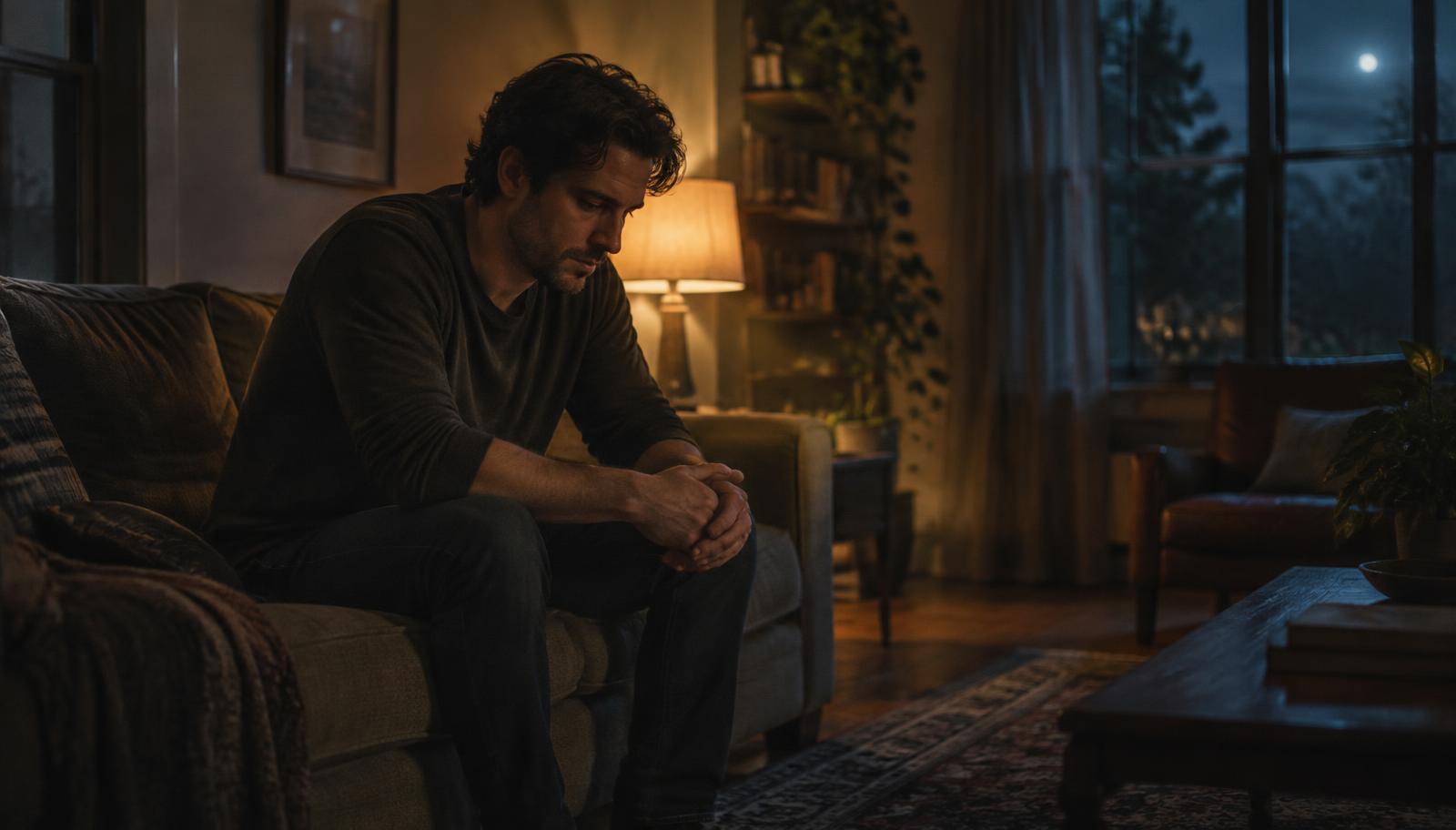
Because sometimes sobriety doesn't initially feel like freedom. Sometimes it feels like everything got louder.
The grief is still there. The childhood memory is still there. Shame didn't pack its bags when the substance left. The bills are waiting. The relationship is damaged. Loneliness may be worse because some of the people you used with are people you can no longer safely be around.
And now there is no chemical buffer between you and any of it.
That is one reason I think we do people a disservice when we talk about addiction only in terms of stopping a behavior.
Stopping matters enormously.
But a human being still has to live inside the life that remains.
There was usually a reason numbing worked
This is not the same thing as saying every person with a substance-use disorder has trauma, or that addiction can always be reduced to one hidden emotional wound. Human behavior is rarely that simple. Genetics, environment, reinforcement, mental health, availability, social context and the pharmacology of substances all matter.
But for many people, substances do acquire an emotional job.
Maybe alcohol makes social anxiety quiet enough to walk into the room.
Maybe opioids numb emotional pain alongside physical pain.
Maybe stimulants temporarily replace exhaustion or emptiness with energy.
Maybe using is the only reliable way somebody knows to interrupt thoughts they cannot stand being alone with.
When something works quickly—even when the consequences become devastating—the brain has a powerful reason to remember it.
Recent research helps explain why recovery cannot be reduced to willpower. A 2026 systematic review of experiential avoidance—the tendency to escape or suppress painful thoughts, feelings or bodily experiences—found a meaningful body of evidence connecting it with psychoactive substance-use outcomes, although the relationships vary and shouldn't be oversimplified.
A 2025 study of people with substance-use disorders and histories of trauma exposure likewise examined the roles of PTSD symptoms, emotional avoidance, shame and guilt in difficulties regulating emotion.
In plain language, sometimes taking away the substance exposes the problem the substance had been temporarily covering.
That's not failure.
That's information.
“Feel your feelings” is easy advice to give
I hear phrases like this constantly in wellness spaces:
Sit with the discomfort.
Feel it to heal it.
Stop running from your emotions.
There is some wisdom buried in those phrases, but I think we need to be careful about how casually we say them.
If someone has spent ten years escaping an unbearable internal experience, telling them to simply sit with it can be like telling somebody who never learned to swim to relax in deep water.
What does “sit with it” actually mean at 1:30 in the morning when the craving is strong, your chest feels tight, you're furious at yourself, and your brain remembers exactly what would make the feeling disappear for a while?
That's where recovery becomes practical rather than inspirational.
Maybe it means calling somebody before the craving becomes a decision.
Maybe it means leaving an environment where using is easy.
Maybe it means learning how long an urge tends to rise and fall instead of assuming its current intensity will last forever.
Maybe it means medication for substance-use disorder, professional treatment, peer support, recovery community, contingency management or another evidence-based pathway.
Maybe it means finally treating the PTSD, depression, anxiety, grief or other difficulty that has been living alongside the addiction.
Usually it means building more than one option.
Because “don't use” tells someone what not to do.
Recovery also has to help answer what to do instead.
Distress tolerance isn't pretending something doesn't hurt
A 2026 systematic review looked specifically at distress tolerance in treatment for people experiencing both PTSD and substance-use disorders. The evidence is still developing—the authors found only seven unique studies meeting their criteria, and results were not uniform—but lower distress tolerance was associated with slower or less improvement in PTSD symptoms in the reviewed research. The authors called for more study of distress-tolerance skills within existing treatments.
I like the concept of distress tolerance when it is explained correctly.
It does not mean becoming a person who can tolerate unlimited suffering.
It does not mean staying in abusive situations.
It does not mean suppressing emotion until you appear calm.
It means discovering that an uncomfortable internal state can exist without automatically dictating what you do next.
That gap can be tiny at first.
An urge appears.
And instead of immediately obeying it, there are five minutes.
Eventually maybe there are fifteen.
Inside that space, another choice becomes possible.
That is not a small accomplishment.
Recovery can expose grief
There can also be grief in recovery that people are reluctant to admit because they're afraid it will sound like they want the addiction back.
A person may grieve relationships connected to using. They may grieve years that feel lost. They may grieve the version of themselves they thought they would become. They may look around at the damage caused during active addiction and have to live with the fact that an apology cannot guarantee reconciliation.
There may even be grief for the substance itself.
That sounds uncomfortable, but human attachment is complicated. Something can hurt you terribly and still have been woven into your routines, relationships, identity and methods of coping.
Acknowledging that complexity isn't glorifying addiction.
It is being truthful enough to recover from it.
A life needs somewhere to go
The longer I think about recovery, the less interested I am in asking only, What did you stop doing?
I want to know what you're building.
Who can you call now?
What do you do when you're angry?
Where do you go when you're lonely?
What makes tomorrow worth showing up for?
Who are you becoming now that so much of your energy is no longer organized around obtaining, using, hiding or recovering from a substance?
Those questions move recovery beyond abstinence alone without diminishing the importance abstinence may have for someone's individual recovery plan.
They move us toward a life.
And perhaps that's the deeper challenge. Removing something destructive can create an empty space. If nothing meaningful is built there, the emptiness itself can become dangerous.
Recovery deserves more than an empty space.
It deserves relationships that don't require self-destruction to belong. It deserves treatment without humiliation. It deserves ordinary mornings. Work that matters. Laughter you actually remember. A nervous system that gradually learns there are other ways through distress.
And when pain inevitably returns—as pain does in every human life—the goal isn't necessarily to become somebody who doesn't hurt.
Maybe it is to become somebody who has more places to take the hurt.
A GraceBridge Reflection
Instead of asking only what you are trying to stop, ask what the behavior has been doing for you. What feeling does it interrupt? What situation makes the urge stronger? What do you need in that moment that you don't yet know how to ask for?
Then make the question practical:
If the old way of coping is no longer available to me, what are three places I can take this feeling instead?
That answer might include a person, a place, a treatment provider, a recovery meeting, a coping skill or an emergency/crisis resource. It doesn't have to be profound.
It needs to be usable when life isn't.
A quiet moment
Reflect on what you just read
Share how you're feeling after reading What Are You Supposed to Do With the Pain When You Stop Numbing It?, and receive a few gentle journaling prompts drawn from this article. Nothing you write is saved.
AI-generated educational prompts, not counseling. If you are in crisis, call or text 988 (US).
Read next
Addiction Recovery
The Empty Hours: Learning How to Live Without Numbing
Early recovery opens hours that used to be filled. This compassionate guide explains restlessness, returning emotions, and craving patterns—with clear safety information on withdrawal, overdose risk, naloxone, and where to find help.
Addiction Recovery
Addiction Recovery: Rebuilding Trust With Yourself
Trust is rebuilt in tiny increments: a kept promise, a difficult feeling faced instead of numbed, a morning chosen with intention.

Addiction Recovery
Who Are You Allowed to Become After You Have Hurt People?
On shame, responsibility, and self-forgiveness in addiction recovery, and building a life that honors the harm without being defined by it.
Gentle notes for the healing road
One thoughtful letter a week. No noise, no pressure. Unsubscribe anytime.