
Trauma
What If the Safest Version of You Is Also the Loneliest?
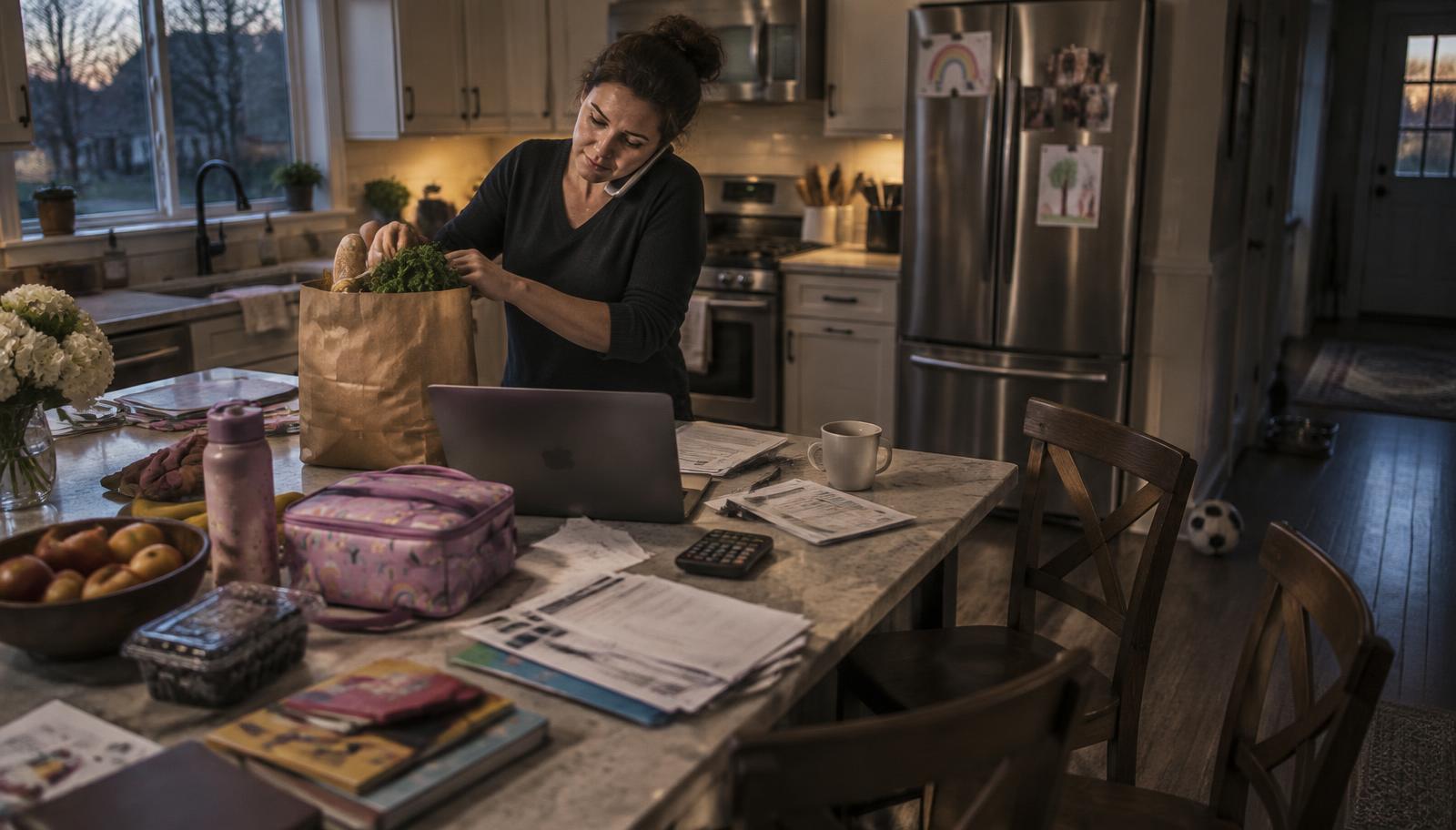
When surviving teaches you to need less, expect less, and disappear emotionally before anyone has the chance to disappoint you
There are people who seem almost impossibly capable from the outside. They rarely ask for help. They manage crises without creating much noise. When something goes wrong, they make the appointment, find the money, solve the problem, comfort everyone else, and keep moving. People call them strong because strength is the most obvious thing to call a person who appears to need very little.
What is less obvious is that self-sufficiency can sometimes grow out of experiences in which depending on other people did not feel especially safe.
That does not mean every independent person is traumatized, and it would be irresponsible to turn independence itself into a symptom. Some people simply value autonomy. Temperament, culture, family structure, opportunity, and personality all shape how comfortable a person is relying on others. But trauma and attachment research do give us good reason to take interpersonal avoidance seriously when it develops alongside fear, mistrust, or the expectation that vulnerability will eventually be used against us.
A systematic review of 138 studies examining insecure attachment and post-traumatic stress found consistent links between attachment processes and trauma-related symptoms, although those relationships were not identical for attachment anxiety and avoidance. Researchers identified several possible mechanisms, including emotion regulation, cognitive appraisals, self-esteem, and social factors. Another meta-analysis examining trauma-focused psychotherapy found that improvement in post-traumatic stress was meaningfully associated with improvement in interpersonal functioning. Taken together, the literature reminds us that trauma is not only something that can alter the way people respond to memories. It can also alter the way they approach other human beings.
This is where strength can become difficult to interpret.
Sometimes the person who “doesn't need anybody” once needed somebody very badly.
Perhaps help was inconsistent. Perhaps asking created guilt. Maybe private information was later weaponized. Maybe depending on another person created an obligation that became uncomfortable or dangerous. Perhaps the people who were supposed to provide safety were themselves unpredictable. A person does not have to consciously decide, “I will never need anyone again.” The lesson can become behavioral long before it becomes verbal. You handle it yourself because handling it yourself reduces uncertainty.
Eventually the strategy works so well that everybody admires it.
That can make it difficult to question.
When survival strategies are obviously destructive, people tend to recognize the cost. This one often earns compliments. You are responsible. You are low maintenance. You never burden anybody. You recover quickly. You have your own money, your own plan, your own backup plan, and another plan in case the first two fail. You know how to leave before you need too much. You know how to grieve privately. You know how to make sure the people around you are never placed in the uncomfortable position of having to carry you.
There is real competence in that. It should not be dismissed simply because part of it may have developed through adversity.
But competence and freedom are not always the same thing.
A person can be extraordinarily good at never needing anyone and still be living under an old rule: dependence is dangerous.
That rule becomes especially difficult to see because it often presents as preference. “I would rather do it myself.” Sometimes that is simply true. At other times, doing it yourself prevents something more frightening than inconvenience. It prevents having to wait and see whether another person will show up.
The emotional risk of asking for help is not only the possibility of hearing no. It is allowing somebody else to become relevant to your well-being. There is uncertainty in that. They may misunderstand. They may disappoint you. They may help today and fail tomorrow. They may know something tender about you that you cannot take back.
If life has taught you that uncertainty inside relationships is dangerous, being needed can feel considerably safer than needing.
That asymmetry can shape entire relationships. You become the reliable friend but rarely the friend who calls crying. You care for everybody when they are sick but insist you are fine when you are the one struggling. You become skilled at noticing subtle changes in other people's moods while revealing remarkably little about your own. People may feel deeply known by you while realizing, eventually, that very few people actually know you.
Recent research also continues to examine how avoidance and social support interact after trauma. A 2026 study of trauma-exposed adults found a relationship among experiential avoidance, social support, and post-traumatic growth. That study does not establish a universal formula for recovery, and post-traumatic growth itself should never be treated as an expectation placed on survivors. What it adds to a larger body of literature is another reminder that avoidance and connection are not peripheral issues after trauma. They can become part of how life is reconstructed.
This matters because loneliness does not always look lonely.
Sometimes loneliness has five hundred contacts in its phone.
Sometimes it is married.
Sometimes it organizes everybody's birthday dinner.
Sometimes it is the person everyone describes as “the strong one.”
The absence of dependence is not necessarily the presence of connection.
There is also a distinction worth making between boundaries and preemptive disappearance. Healthy boundaries allow us to decide who has access to us and under what conditions. Preemptive withdrawal sometimes operates from a different assumption: if I never need enough, reveal enough, or hope enough, I can reduce how much another person is capable of hurting me.
That strategy makes sense.
It may also make intimacy almost impossible.
Real closeness introduces risk because another person becomes capable of affecting us. No amount of healing can make relationships completely safe. People remain imperfect. Trust should be earned rather than handed out indiscriminately, and nobody recovering from interpersonal trauma needs to prove progress by becoming more available than feels wise.
The question is subtler than “Can I trust people again?”
Perhaps it is: Have I built such an effective system for preventing disappointment that I have also prevented anyone from truly being there for me?
There is an important difference between knowing you can survive alone and believing you must.
One is capacity.
The other can become captivity.
Recovery may not require surrendering the strength that kept you alive. It may mean giving that strength more choices. You can still solve problems. You can still leave when necessary. You can still have your own money, your own voice, your own judgment, and your own boundaries. The growth is not becoming dependent. It is discovering that accepting care does not automatically make you powerless.
Maybe the safest version of you learned how to survive without asking much from anybody.
The next version does not have to become less strong.
Perhaps they simply become strong enough to occasionally find out who would stay if they were finally given the opportunity.
A GraceBridge Reflection
Think about the relationships in which you feel safest. Is safety coming from the trust you have built with those people, or from how little you require from them? There is no requirement to become vulnerable with everyone. Instead, consider whether there is one trustworthy relationship in which you consistently offer more care than you permit yourself to receive. What would receiving five percent more support look like—not complete dependence, just five percent?
Sources & Further Reading
- Ban Hong Lim, Mikhaella A. Hodges, and Michelle M. Lilly. “The Differential Effects of Insecure Attachment on Post-Traumatic Stress: A Systematic Review of Extant Findings and Explanatory Mechanisms.” Trauma, Violence, & Abuse. 2020;21(5):1044–1060. DOI: 10.1177/1524838018815136. PMID: 30599805.DOIPubMed
- Benjamin A. Swerdlow, Shelby N. Baker, Feea R. Leifker, Casey L. Straud, David C. Rozek, and Lauren M. Sippel. “The impact of trauma-focused psychotherapy for posttraumatic stress disorder on interpersonal functioning: A systematic review and meta-analysis of randomized clinical trials.” Journal of Traumatic Stress. 2023;36(3):496–510. DOI: 10.1002/jts.22906. PMID: 36628929.DOIPubMed
- Julia C. Sager and Rachel A. Wamser. “Investigating the Associations Between Experiential Avoidance, Social Support, and Posttraumatic Growth.” Violence and Victims. 2026;41(4):593–606. DOI: 10.1891/VV-2024-0181. PMID: 41985912.DOIPubMed
A quiet moment
Reflect on what you just read
Share how you're feeling after reading What If the Safest Version of You Is Also the Loneliest?, and receive a few gentle journaling prompts drawn from this article. Nothing you write is saved.
AI-generated educational prompts, not counseling. If you are in crisis, call or text 988 (US).
Read next

Trauma
What If the Part of Trauma You Can’t Forgive Is Yourself?
When surviving required choices, silence, reactions, or compromises that no longer fit the person you believe yourself to be

Trauma
If I Stop Hurting, Does That Mean It Didn’t Matter?
Why healing can feel like betrayal after trauma, and how the truth of what happened can stay intact even as pain loosens its hold.

Trauma
Why Your Body Crashes After the Crisis Is Over
When the emergency ends, exhaustion may finally become impossible to ignore. This compassionate guide explains post-crisis depletion without diagnosing it—and helps readers know when rest is appropriate and when symptoms deserve professional care.
Gentle notes for the healing road
One thoughtful letter a week. No noise, no pressure. Unsubscribe anytime.